
Retail · Veg & fruit
Loose weight, units and a shelf life
Stock in kilos, packs, boxes or pieces — whichever the crate arrives in — with an expiry date on the line and waste written off before it becomes a guess.
Sound familiar?
Half a crate going in the bin with nobody recording it
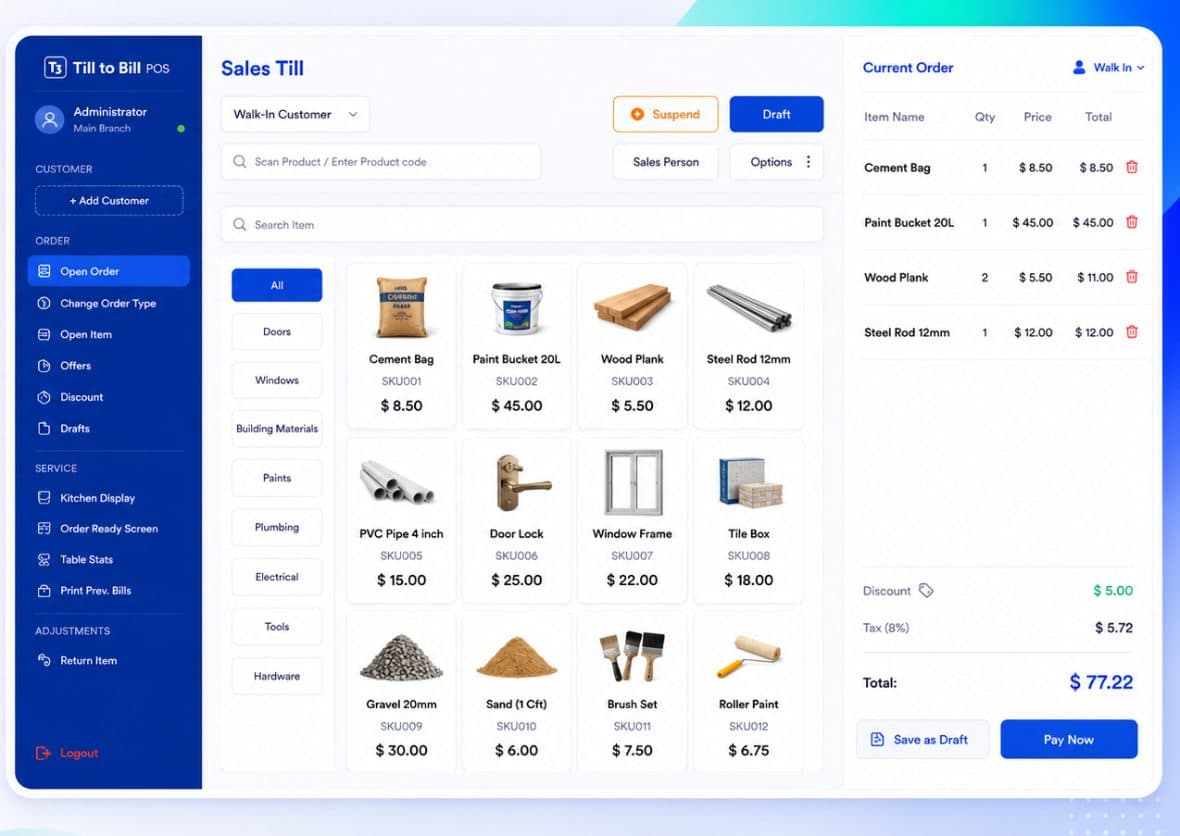
Selling by weight when the system only understands units
Not knowing whether the margin on tomatoes is real
What you get on day one
Units that match the crate
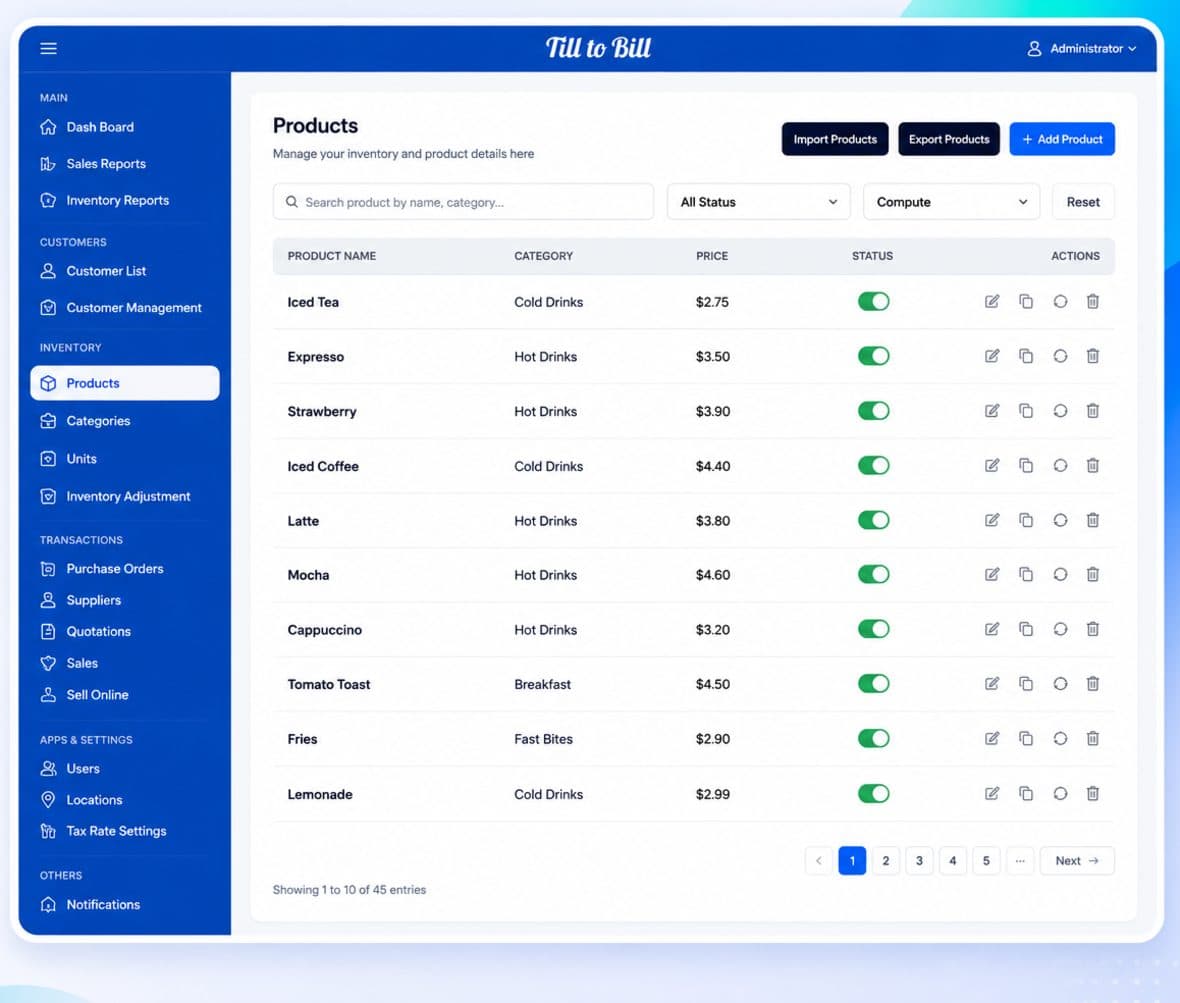
Kilos, packs, boxes, jars or pieces. Stock is held in the unit you actually buy and sell.
Expiry on the stock line
Every stock line carries an expiry date, so the shelf life is visible before it becomes a write-off.
Waste as its own record
Written off on a separate audited path with a reason, so wastage never hides inside your sales figures.
Supplier per item
Each line links to the supplier who provides it, with unit price and cost history behind it.
Wastage becomes a number, not a feeling
A shop that logs waste honestly for one month almost always finds a couple of percent of turnover sitting in the bin. Recording it separately from sales is what makes it fixable.
- Waste logged with a reason, per branch
- Expiry visible on the inventory report
- Cost per unit tracked against the supplier
6
units of measure supported
1
expiry date per stock line
2%
of turnover typically found in waste
Recording waste properly was the uncomfortable bit. It also paid for the system twice over.
Questions we get asked
See it on your own menu
Send your menu across and we will build it into a live demo till before the call.